Published on
September 23, 2026
Claude for Advisors Is Not the Strategy
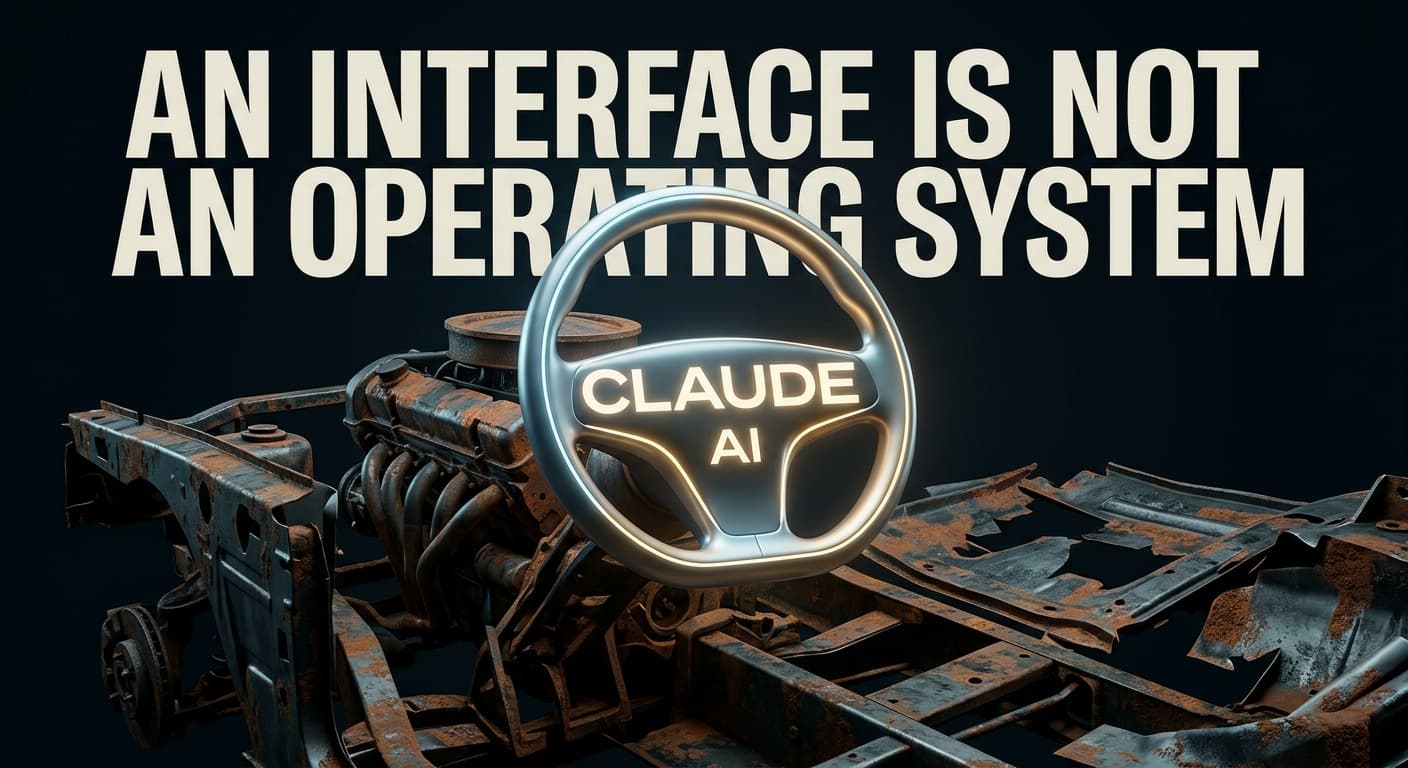
Claude is impressive. But it is not the strategy.
Anthropic's launch of Claude for Financial Advisors is an important moment for wealth management.
It connects Claude with custodians, portfolio platforms, CRMs, planning tools, and other systems that advisors already use. The initial ecosystem includes firms such as Charles Schwab, BlackRock, Addepar, Envestnet, iCapital, Orion, Wealthbox, Wealth.com, Vanguard, and Zocks.
The industry response has been predictable:
- Excitement about AI finally entering the advisor workflow.
- Concern about data security and governance.
- Questions about whether a general-purpose model can understand different advisory businesses.
- Debate about whether this helps advisors or simply adds another layer to the technology stack.
My view is slightly different.
The launch is significant because the model is no longer sitting entirely outside the advisor's operating environment.
- Preparing for client meetings.
- Reviewing portfolio information.
- Drafting follow-up communications.
- Summarizing documents.
- Working with planning data.
- Preparing internal analysis.
- Staging administrative actions for review.
That is useful.
But connecting Claude to more systems does not automatically create a unified operating model for a wealth manager.
It may simply create a more capable way to ask questions of several systems that still operate independently.
The integration trap
Wealth management has spent decades accumulating technology:
- Custodian platforms.
- Portfolio accounting systems.
- Financial planning software.
- CRM platforms.
- Document repositories.
- Reporting tools.
- Alternative investment databases.
- Spreadsheets.
- Email and calendars.
Each system may contain valuable information.
But the difficult questions usually cross system boundaries:
- Which portfolio value is correct?
- Has the latest transaction been booked?
- Is the data reconciled across custodians?
- Which information came from the client and which came from a third party?
- What changed since the last review?
- Which obligations are still outstanding?
- Can the advisor explain the answer to the client?
A connector can make information available.
It does not automatically make that information complete, reconciled, or trustworthy.
A polished answer can still be wrong
A fluent AI assistant can produce a highly convincing answer from incomplete or inconsistent data.
That creates a dangerous combination:
- The data is fragmented.
- The context is incomplete.
- The answer sounds confident.
- The user assumes the system has checked everything.
- The output moves into a client conversation.
The risk is not only hallucination.
The more serious risk in wealth management may be unnoticed incompleteness.
The answer may be based on:
- A missing account.
- An outdated position.
- A late transaction.
- An unreconciled cash balance.
- An incomplete household relationship.
- A document that was not available to the model.
- A system that failed silently.
In a regulated and relationship-driven business, "I could not find the information" is safer than a confident answer built on partial information.
The real question is not access
The industry is understandably focused on whether Claude can connect to the systems advisors use.
But access is only the beginning.
The more important questions are:
- Is the data normalized?
- Is it reconciled?
- Are duplicates removed?
- Are conflicting values flagged?
- Is the source of each number visible?
- Can the system show what changed over time?
- Are stale or missing records identified?
- Is there a clear audit trail?
- Can a human approve the result before it is used?
This is the difference between connected data and decision-ready data.
Those are not the same thing.
What RIAs and family offices should ask
Before treating any AI assistant as a strategic layer, I would ask:
- What is the source of truth? If two systems disagree, which one wins? Is that decision configurable, documented, and visible to the user?
- What does the model not know? Can the assistant identify missing feeds, unavailable documents, stale records, and unsupported conclusions?
- Can every important answer be traced? For each material figure or statement, can the advisor see the underlying source, date and time, account or household, transformation applied, relevant assumptions, and unresolved exceptions?
- Where is human approval required? The current Claude offering is designed to keep investment recommendations, client communications, compliance determinations, and other regulated activities subject to human review and approval. Firms still need to define what must be reviewed, by whom, at which stage, based on what evidence, and how approval is recorded.
- Who owns the intelligence layer? If the capability depends entirely on a model provider's connectors, product roadmap, and data-access decisions, the firm may be borrowing intelligence rather than building a strategic capability. That can be reasonable for a first step, but firms should understand the difference.
The provocative point
The biggest risk is not that Claude replaces the advisor.
The bigger risk is that firms mistake AI access for operational transformation.
Connecting an AI model to the existing stack may produce immediate productivity gains.
But it may also preserve the underlying problems:
- Duplicate data.
- Broken workflows.
- Manual reconciliation.
- Unclear ownership.
- Weak data governance.
- Inconsistent processes.
- Hidden exceptions.
- Poor auditability.
AI can accelerate a good process.
It can also accelerate a bad one.
What should the advisor own?
I do not think every family office or RIA needs to build its own foundation model.
That would be expensive, unnecessary, and strategically distracting.
But every serious firm should think carefully about owning or controlling its own intelligence foundation:
- Its normalized client and household data.
- Its business definitions.
- Its permission model.
- Its workflow logic.
- Its audit trail.
- Its reconciliation rules.
- Its model-independent context layer.
- Its ability to switch AI providers.
The model should be replaceable.
The firm's knowledge, controls, and data context should not be.
The opportunity is still enormous
None of this diminishes the importance of Claude for Financial Advisors.
In fact, it may make the opportunity clearer.
The launch could help advisors spend less time on:
- Meeting preparation.
- Research.
- Documentation.
- Follow-up.
- Administrative coordination.
- Searching across disconnected applications.
That is meaningful.
But the firms that gain the most will probably not be those that simply install the newest AI assistant.
They will be the firms that use it on top of:
- Reliable data.
- Clearly defined workflows.
- Strong governance.
- Consistent operating procedures.
- Visible human accountability.
The takeaway
Claude for Financial Advisors may become an important interface for wealth management.
But an interface is not the same as an operating system.
The long-term winners will not be determined only by which model advisors use.
They will be determined by whether firms can answer a more fundamental question:
Can we trust the information underneath the answer?
If the answer is yes, AI can become a powerful force multiplier.
If the answer is no, the industry may simply get faster at producing answers that still require someone to check everything manually.
The future of AI in wealth management will not be won by the most impressive demo.
It will be won by the firms that make reliable, traceable, decision-ready intelligence available wherever advice is delivered.
Sources
- [1] Anthropic, "Claude for Financial Advisors." https://claude.com/blog/claude-for-financial-advisors
- [2] Reuters, "Anthropic targets financial advisers with new Claude tool," September 14, 2026. https://www.reuters.com/business/anthropic-targets-financial-advisers-with-new-claude-tool-2026-09-14/
- [3] WealthManagement.com, "Anthropic's Claude for Advisors Sparks Debate," September 15, 2026. https://www.wealthmanagement.com/artificial-intelligence/anthropics-claude-for-advisors-sparks-debate
- [4] TechTimes, "Claude for Financial Advisors Debuts With BlackRock, Schwab; Client Data Stays on Custodian Servers," September 15, 2026. https://www.techtimes.com/articles/327525/20260915/claude-financial-advisors-debuts-with-blackrock-schwab-client-data-stays-custodian-servers.htm