Published on
Mar 12, 2026
From Tech Stack Sprawl to Autopilot Infrastructure
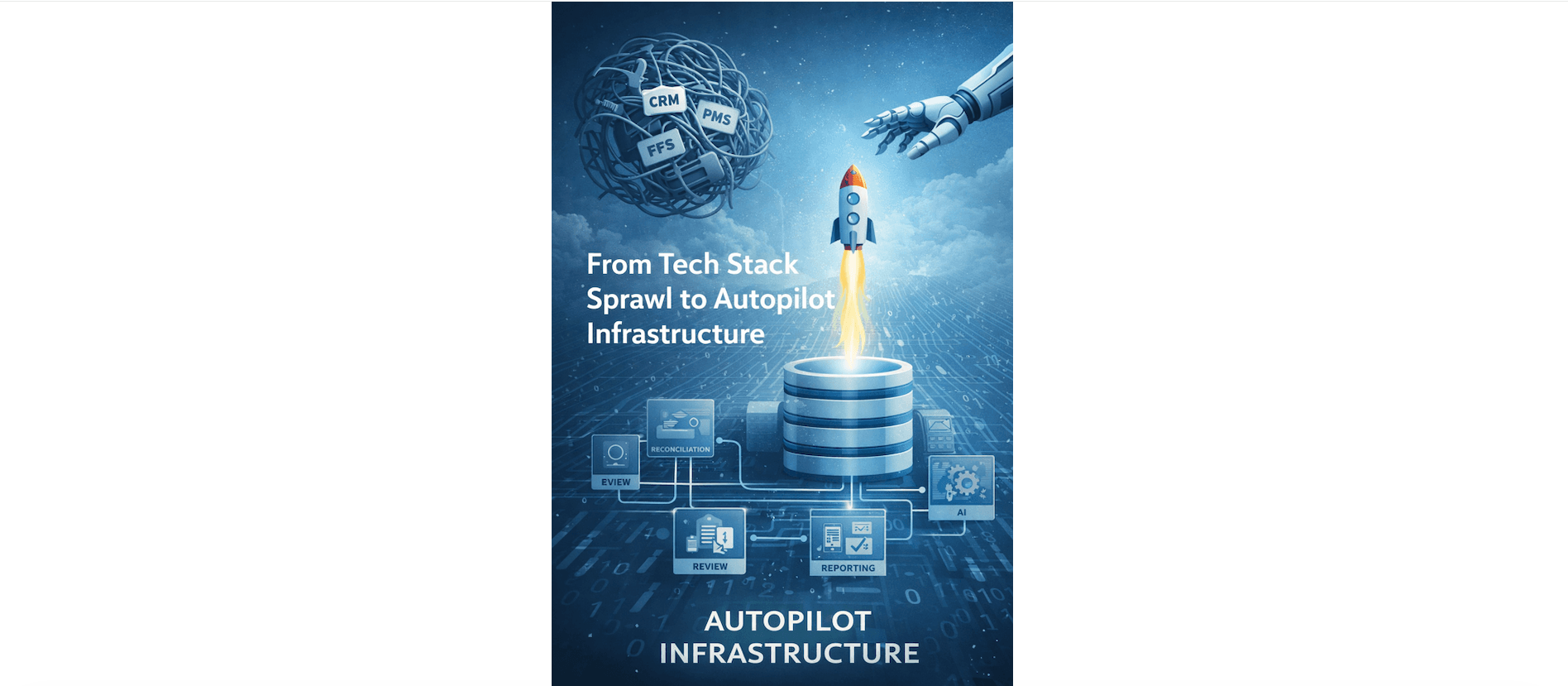
Most wealth and asset managers I speak with are quietly heading in the same direction: their tech stacks are going to shrink, not grow. Instead of adding yet another platform, they want a small set of core systems and a handful of focused utilities that just get specific jobs done.
In our world, that "core" is increasingly the data warehouse or lake. Once all portfolio, CRM, planning, and reporting data live in one place instead of scattered across PMS, CRM, and FPS silos, something interesting happens: firms stop shopping for tools and start shopping for outcomes. They no longer ask, "Which system does this?" but, "Who can fix this reconciliation break, complete this review, or generate this package end-to-end?"
AI-Powered Apps Become Operating Fabric
This is where lightweight, AI-powered apps layered directly on top of the warehouse become so powerful. A small reconciliation utility that automatically detects, explains, and fixes breaks is not "just another app" – it becomes part of the firm's operating fabric from day one. Pull that utility out and critical workflows fail, because it is now wired into the firm's single source of truth. In practice, the client has married their data and their outcomes to the same infrastructure.
Julien Bek at Sequoia Capital recently described the shift from "copilots" (tools that help professionals do work) to "autopilots" (systems that deliver the work itself), arguing that the next generation of winners will look more like services powered by software than SaaS licenses. That framing resonates strongly with what we see: once a client's data foundation is in place, they stop asking us for dashboards and start asking us to close the books, clean the data, or resolve the exceptions.
From Software Budget to Services Budget
For vendors, this changes the product strategy. If you only sell a tool, you are fighting for a line item in the software budget and competing with everything else in the stack. If you sit on the warehouse and solve a painful, recurring job – like reconciliation, data quality checks, or complex reporting – you are replacing a services budget instead. You move from "nice-to-have integration" to "if this goes down, we can't operate tomorrow morning."
Three Practical Implications
I see three practical implications for data-rich firms in wealth and asset management:
- Invest first in consolidating data into a warehouse or lake – that is the precondition for any meaningful automation.
- Look for targeted "utilities" that plug into that warehouse and eliminate specific manual workflows, especially where teams are still exporting to Excel or doing swivel-chair ops.
- Measure success not by feature adoption, but by hours of work removed from the org and incidents that never happen.
As AI matures, the boundary between software and services will continue to blur. The firms that win won't be the ones with the longest feature checklist; they'll be the ones embedded so deeply in the client's data and daily work that removing them feels like uninstalling a piece of core infrastructure. That's the kind of relationship we're building toward.